Description
Event Details:
Date: Saturday, March 21, 2026
Time: 11 AM Central
Venue: MUSE Sturgeon Bay
Directions: 330 Jefferson Street, Sturgeon Bay, Wisconsin 54235. On the corner of Third Avenue and Jefferson Street in downtown Sturgeon Bay.
Phone: 920-333-2859
Email: tickets@musesturgeonbay.com
MUSE is officially an approved streaming venue for THE MET Opera: LIVE in HD! That’s right! You can experience the world of The MET Opera in your own neighborhood.
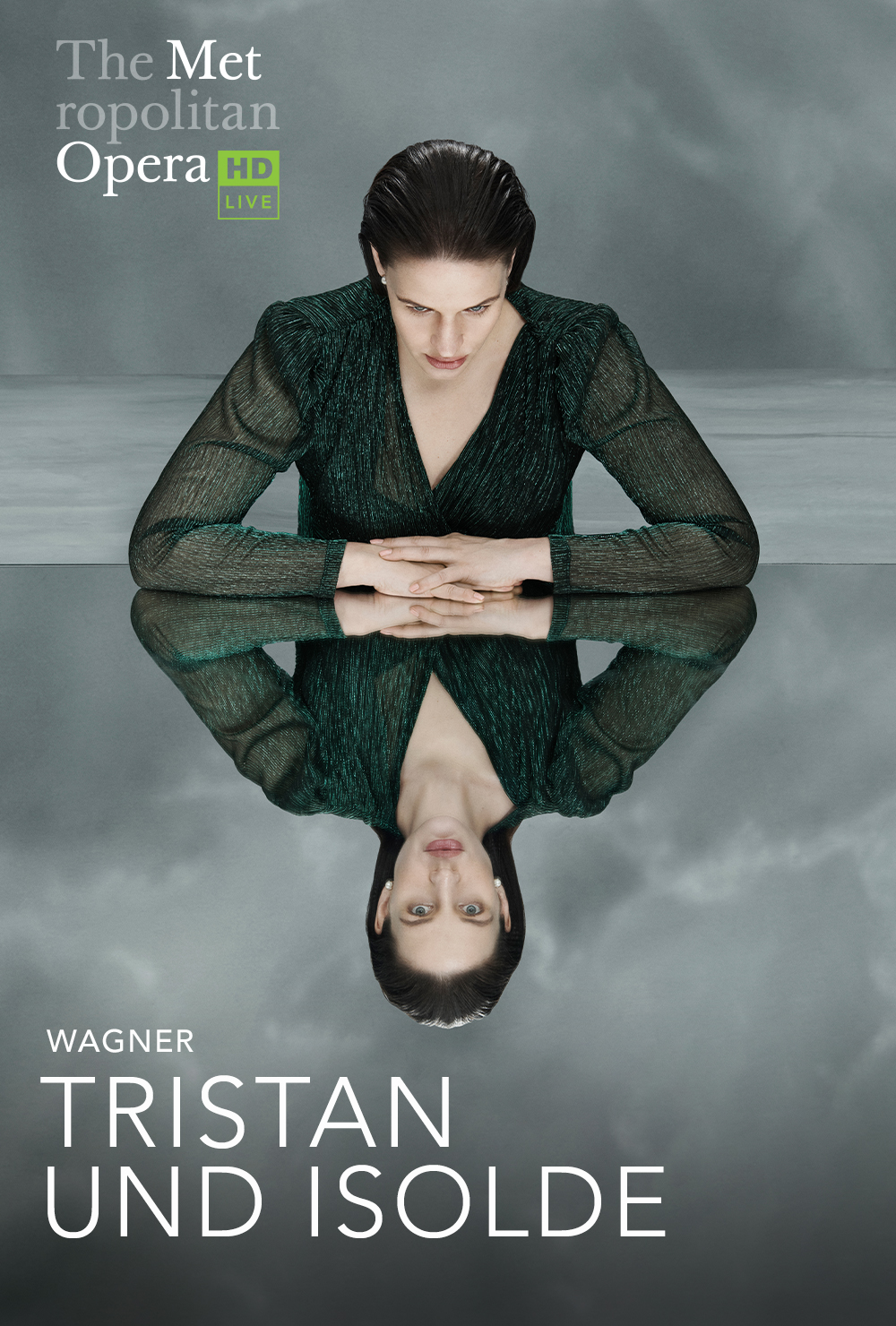
In a truly unmissable event, the electrifying Lise Davidsen tackles one of the ultimate roles for dramatic sopranos: the Irish princess Isolde in Wagner’s meditation on love and death. Heroic tenor Michael Spyres stars opposite Davidsen as the love-drunk Tristan. The momentous occasion also marks the advent of a new staging by Yuval Sharon.Yannick Nézet-Séguin conducts the new production, which will be transmitted live from the Met stage to cinemas on March 21.
One of the world’s greatest Wagnerian artists, Lise Davidsen tackles a pinnacle of the dramatic soprano repertoire, the Irish princess Isolde, opposite heroic tenor Michael Spyres as the love-drunk Tristan in Wagner’s transcendent epic. Davidsen returns to the Met after celebrated turns in Beethoven’s Fidelio (2025), Puccini’s Tosca (2024), Verdi’s La Forza del Destino (2024), and Strauss’s Der Rosenkavalier (2023) and Ariadne auf Naxos (2022).
Yuval Sharon—hailed by The New York Times as “the most visionary opera director of his generation” and the first American to direct an opera at the famed Wagner festival in Bayreuth— introduces an epic new production of Tristan und Isolde, which marks the company’s first performances of the opera in ten years and Music Director Yannick Nézet-Séguin’s first time conducting it at the Met.
A pinnacle of classical music, Tristan und Isolde is built on the idea of a great yearning, irresistible and self-perpetuating, that cannot be fulfilled in this life. The prelude sweeps the listener into an ecstatic yet tortuous world of longing, and the vocal parts are of unique stature. The opera culminates in Isolde’s soaring final aria, “Mild und leise.”
Sung in: German
Synopsis
ACT I
Isolde, an Irish princess, is being taken to Cornwall aboard the ship of Tristan, whose uncle, King Marke, plans to marry her. She becomes enraged by a sailor’s song about an Irish girl, and her maid, Brangäne, tries to calm her. Isolde interrogates Tristan, but he replies evasively. His companion Kurwenal loudly ridicules the Irish women and sings a mocking verse about Morold, Isolde’s fiancé, who was killed by Tristan when he came to Cornwall to exact tribute for Ireland. Isolde, barely able to control her anger, tells Brangäne how the wounded Tristan came to her in disguise after his fight with Morold so that he could be healed by Isolde’s knowledge of herbs and magic, which she learned from her mother. Isolde explains to Brangäne that she recognized Tristan, but her determination to take revenge for Morold’s death dissolved when he pleadingly looked her in the eyes. She now bitterly regrets her reluctance to kill him and wishes death for him and herself. Brangäne reminds her that to marry a king is no dishonor and that Tristan is simply performing his duty. Isolde maintains that his behavior shows his lack of love for her, and asks Brangäne to prepare her mother’s death potion. Kurwenal tells the women to prepare to leave the ship, as shouts from the deck announce the sighting of land. Isolde insists that she will not accompany Tristan until he apologizes for his offenses. He appears and greets her with cool courtesy. When she tells him she wants satisfaction for Morold’s death, Tristan offers her his sword, but she will not kill him. Instead, Isolde suggests that she and Tristan make peace with a drink of friendship. He understands that she means to poison them both, but still drinks, and she does the same. Expecting death, they exchange a long look of love, then fall into each other’s arms. Brangäne admits that she has in fact mixed a love potion, as sailors’ voices announce the ship’s arrival in Cornwall.
ACT II
In the garden of Marke’s castle, Isolde waits impatiently for a rendezvous with Tristan, while distant horns signal the king’s departure on a hunting party. Isolde believes that the party is far off, but Brangäne warns her about spies, particularly Melot, a jealous knight whom she has noticed watching Tristan. Isolde replies that Melot is Tristan’s friend. She sends Brangäne off to stand watch and puts out the warning torch. When Tristan appears, she welcomes him passionately. They praise the darkness that shuts out the light of conventionality and false appearances and agree that they feel secure in the night’s embrace. Brangäne’s distant voice warns that it will be daylight soon, but the lovers are oblivious to any danger and compare the night to death, which will ultimately unite them. Kurwenal rushes in with a warning: the king and his followers have returned, led by Melot, who denounces the lovers. Moved and disturbed, Marke declares that it was Tristan himself who urged him to marry and choose the bride. He does not understand how someone so dear to him could dishonor him in such a way. Tristan cannot answer. He asks Isolde if she will follow him into the realm of death. When she accepts, Melot attacks Tristan, who falls wounded into Kurwenal’s arms.
ACT III
Back at his castle, the mortally ill Tristan is tended by Kurwenal. A shepherd inquires about his master, and Kurwenal explains that only Isolde, with her magic arts, could save him. The shepherd agrees to play a cheerful tune on his pipe as soon as he sees a ship approaching. Hallucinating, Tristan imagines the realm of night where he will return with Isolde. He thanks Kurwenal for his devotion, then envisions Isolde’s ship approaching, but the shepherd’s mournful tune signals that the sea is still empty. Tristan recalls the melody, which he heard as a child. It reminds him of the duel with Morold, and he wishes Isolde’s medicine had killed him then instead of making him suffer now. The shepherd’s tune finally turns cheerful. Tristan gets up from his sickbed in growing agitation and tears off his bandages, letting his wounds bleed. Isolde rushes in, and he falls, dying, in her arms. When the shepherd announces the arrival of another ship, Kurwenal assumes it carries Marke and Melot, and barricades the gate. Brangäne’s voice is heard from outside, trying to calm Kurwenal, but he will not listen and stabs Melot before he is killed himself by the king’s soldiers. Marke is overwhelmed with grief at the sight of the dead Tristan, while Brangäne explains to Isolde that the king has come to pardon the lovers. Isolde, transfigured, does not hear her, and with a vision of Tristan beckoning her to the world beyond, she sinks dying upon his body.
Cast
Creators
Richard Wagner (1813–83) was the controversial creator of music-drama masterpieces that stand at the center of today’s operatic repertory. An artistic revolutionary who reimagined every supposition about theater, Wagner insisted that words and music were equals in his works. This approach led to the idea of the Gesamtkunstwerk, or “total work of art,” combining music, poetry, architecture, painting, and other disciplines, a notion that has had an impact on creative fields far beyond opera.
Production: Yuval Sharon
Set Designer: Es Devlin
Costume Designer: Clint Ramos
Lighting Designer: John Torres
Video Designer: Ruth Hogben
Choreographer: Annie-B Parson
Projection Designer: Jason H Thompson
C. Graham Berwind, III Chorus Director: Tilman Michael